

QA Graphics recently interviewed a long-time customer who has been working with us for eight years.
The conversation was focused on their decision to outsource more of their building automation floor plan and system graphics work as their company continued to grow. What made the story interesting is that this was not a small controls contractor looking for help because they did not have resources.
They were already a good-sized controls system integrator when they first came to QA Graphics.
While this story focuses on one customer, the situation is familiar. We have seen a similar path with many of the controls integrators we support.
A company grows. Project volume increases. Customer expectations change. Controls technicians get pulled into graphics work that competes with programming, startup, service, and customer support. Internal standards are attempted, but they are hard to maintain when work is split between internal staff and multiple outside resources.
At some point, the issue is no longer whether the integrator can do the work.
The issue is whether the process can scale.
This customer was located in a highly competitive market in the Southeast United States and was seeing significant growth. As part of a larger company with mechanical and other related building services, they were beginning to focus on larger opportunities. That growth created new demands on their controls team, their project managers, and the way they delivered BAS floor plans, building automation system graphics, and user interface standards to their customers.
The Original Process Worked Until It Did Not
Like many controls integrators, their control technicians were creating system graphics as part of the job. The techs were already responsible for controls, programming, startup, and customer needs, but graphics were also expected to be completed along the way.
For floor plans, they had a mixed approach.
Some work was being handled by an internal person part time. Other projects were being outsourced to smaller one-person shops. They had also used QA Graphics on a few floor plan projects in the past, including one larger project, and were happy with the results.
For a while, this mixed process worked well enough.
But as the company grew and the project volume increased, the cracks started to show.
Customer expectations were changing. More detailed building automation floor plans were being requested. More customers wanted 3D BAS floor plans. Larger projects required more consistency, more coordination, and better visual standards.
The smaller one-person shops could not always keep up with the volume. Turnaround times became harder to manage. The internal resource was only part time. The final product varied depending on who completed the work.
The issue was not effort.
The issue was scale.
Standards Had Been Attempted, But They Were Not Being Managed
The customer had tried to create a standard for their 3D floor plans, but it was not being managed consistently across the different resources involved.
Work coming from the internal resource did not always match work coming from the outside vendors. Each person had their own style, process, and interpretation of what the finished product should look like.
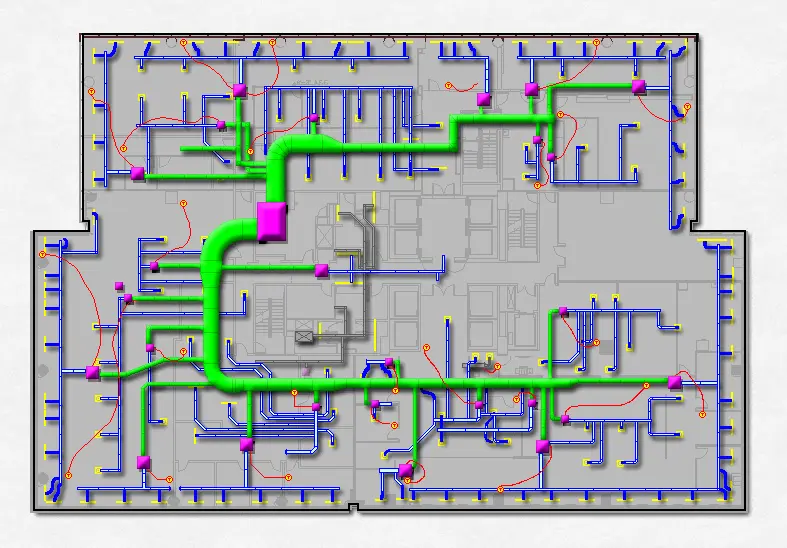
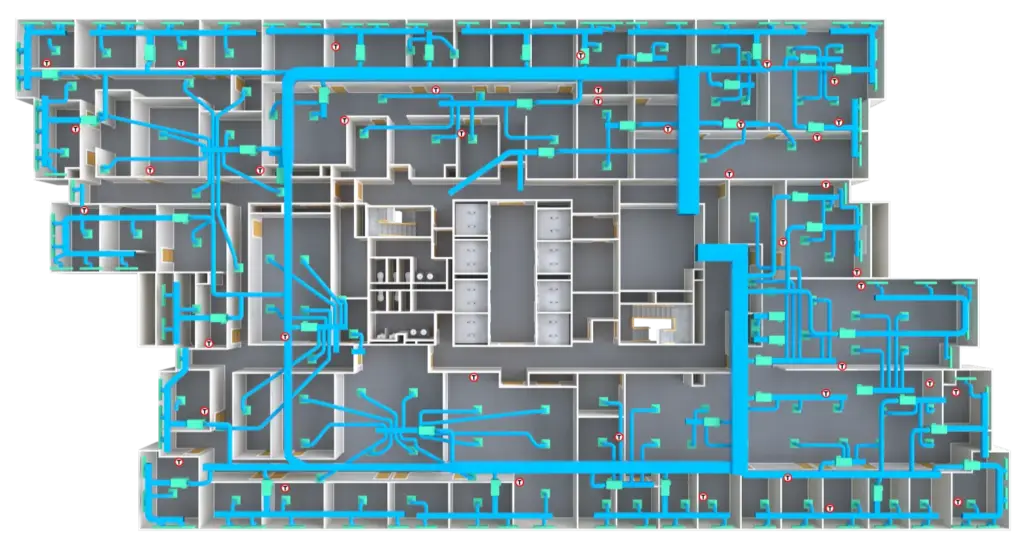
That created problems for the customer as they continued to grow.
When a new project manager or controls technician came on board, there was not always a clear standard to show them. When a customer expected a certain look or level of detail, the deliverable could vary depending on which resource completed the job.
They needed more than help with overflow work.
They needed a repeatable process for outsourced floor plan services for system integrators.
The Assumption About QA Graphics
The customer knew who QA Graphics was. They had used us before and were happy with the work.
But they also had an assumption we have heard from other customers over the years.
They thought that because QA Graphics had a larger in-house team, we may only be interested in larger opportunities. They also wondered if we would be more expensive than the smaller one-person shops they had been using.
We understood the concern, but that is not how our floor plan business works.
Floor plan services are a volume business. Small and mid-sized projects are a major part of what we do. We are not built only for large one-off opportunities. We are built to handle steady project flow across many customers, platforms, and building types.
The cost concern was not something we were worried about either.
While QA Graphics is larger than many graphics outsourcing options, that size gives us advantages. Over the last 20 years, we have developed internal tools, production processes, standards, and training methods that allow us to work efficiently. Our location in Iowa also allows us to remain competitive compared to many areas of the country.
In this case, the customer realized that a larger team was not a disadvantage.
It was part of the solution.
They needed a partner that could support small jobs, larger projects, and growing volume without sacrificing consistency.
Starting With the Floor Plan Standard
When the customer came to QA Graphics for a partner meeting, they walked us through their current situation.
The first step was to review what had already been completed. We asked them to show us a variety of floor plan projects that had been produced internally and by other outside resources.
It became clear quickly that standards had been attempted, but they were not truly in place.
There were too many variations in how the floor plans were built, how the information was displayed, and how the final product looked from project to project.
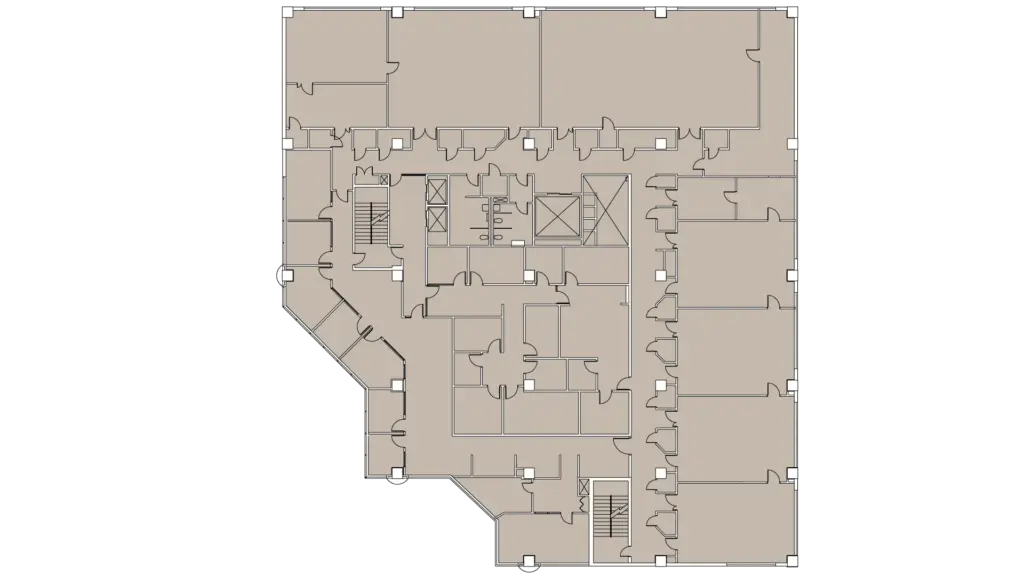
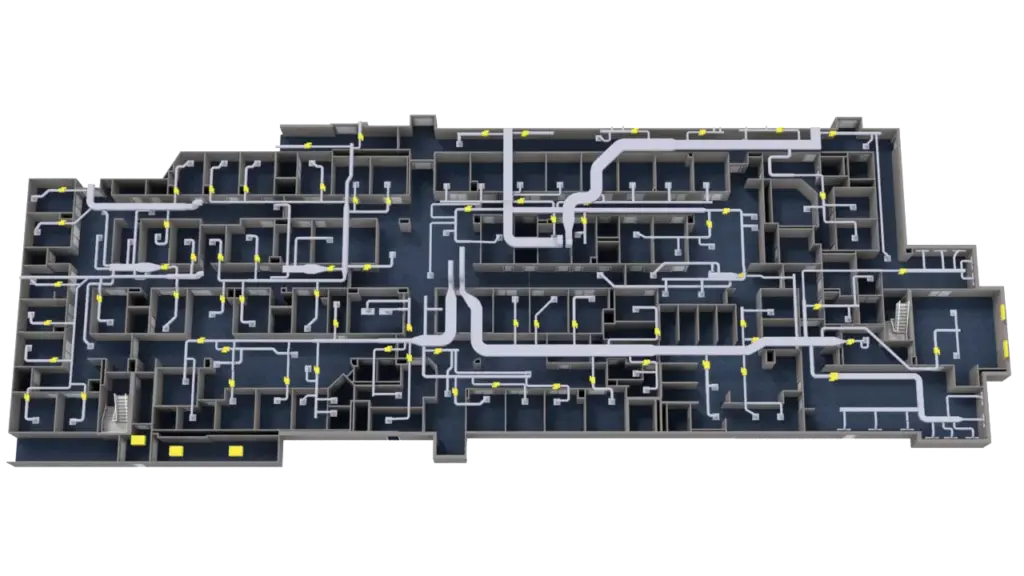
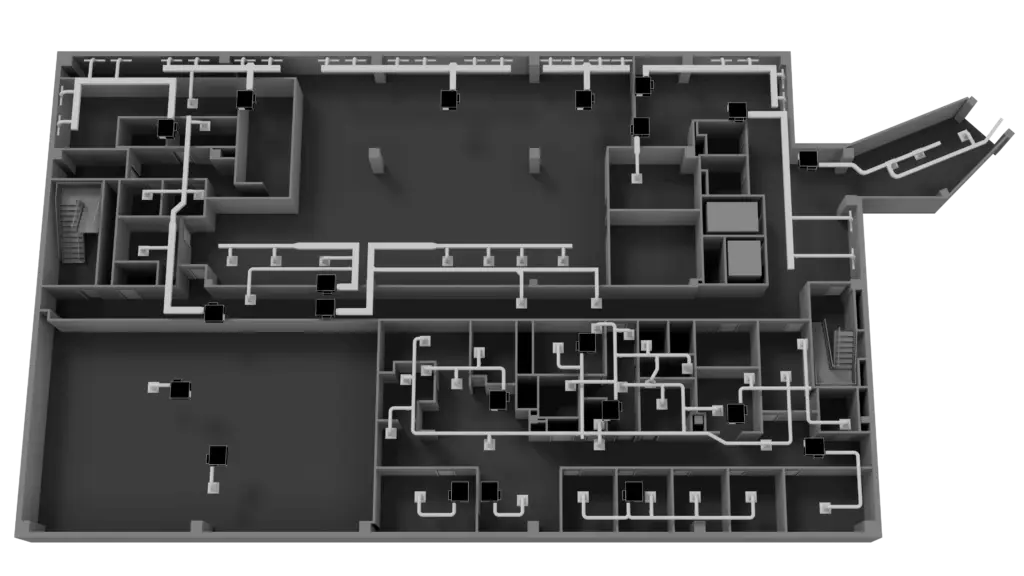
Working together, we helped them establish a repeatable template that could be used as the starting point for most of their work. The goal was not to reinvent every project. The goal was to create a reliable base 2D and 3D floor plan standard that could serve roughly 90 percent of their customer needs.
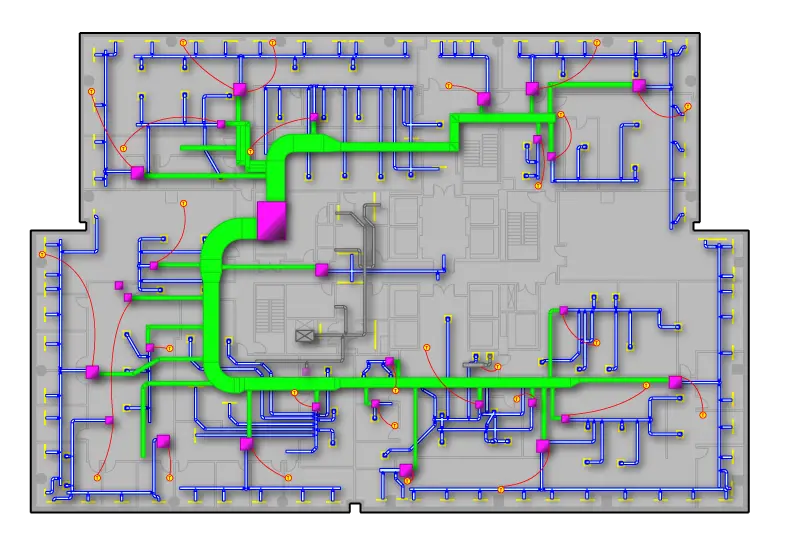
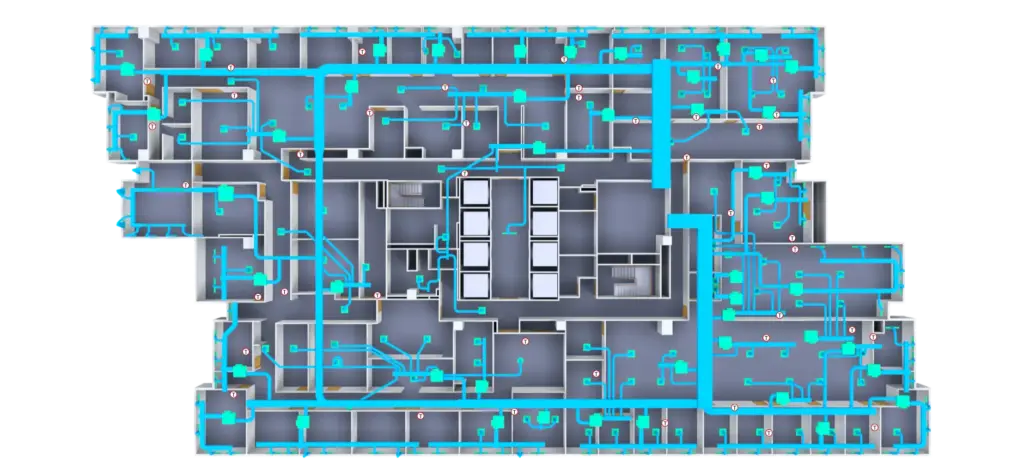
That standard brought consistency to both the UI and the floor plan details.
Items like zoning colors, ductwork, sensors, and other important floor plan attributes were handled in a more repeatable way. Instead of every project being approached differently depending on who completed it, they now had a clear foundation that could be used again and again.
That was a major turning point.
The work was no longer just about getting floor plans done. It was about creating a building automation floor plan standard that could scale with their growth.
The Immediate Impact
Once the customer approved the floor plan standard, QA Graphics started handling volume floor plan work for them.
According to the customer, it made an immediate difference.
Their controls technicians knew that the floor plan portion of the job was in good hands. It was no longer something that had to be pieced together internally or chased through multiple small outside resources.
Fast turnaround time also became a major value to their team. As their project volume increased, they needed floor plans completed quickly without sacrificing quality or consistency. Having a dedicated production partner allowed them to keep projects moving instead of waiting on limited internal resources or smaller outside shops that could become overloaded.
The standard also helped their internal team.
When they brought on a new project manager or controls technician, they could show a consistent product, explain the process, and deliver the same type of finished floor plan from one project to the next.
We also regularly work alongside their team on system graphics projects.
In addition, they use both of QA Graphics’ symbol libraries, including our V5 Symbol Library and Vector Symbol Library. They have also purchased many of our 3D HVAC equipment pieces to support their work.
What started as a few small floor plan projects turned into a long-term relationship built around consistency, capacity, fast turnaround, and trust.
The Bigger Lesson
This customer’s story is a good example of what many growing controls integrators experience.
At a certain point, doing everything internally or relying on a few small outside resources becomes difficult to manage. It may work when volume is low, but as opportunities get larger and customer expectations increase, the process needs to mature.
BAS graphics outsourcing is not always about replacing internal people.
In many cases, it is about supporting them.
Controls technicians should be focused on controls, programming, startup, troubleshooting, and customer relationships. Project managers should have a consistent deliverable they can show and repeat. Customers should receive a polished product that looks like it came from one standard process, not several different sources.
That is where QA Graphics fits best.
We are not trying to replace a controls team or compete with them. We are here to work alongside them, help them scale, and make sure the graphics and floor plan side of the work is handled consistently.
We are proud of the work, but even more proud of the relationship.
After eight years, we are happy to continue being a quiet part of their team.


